Devon Sullivan · 2 September 2026
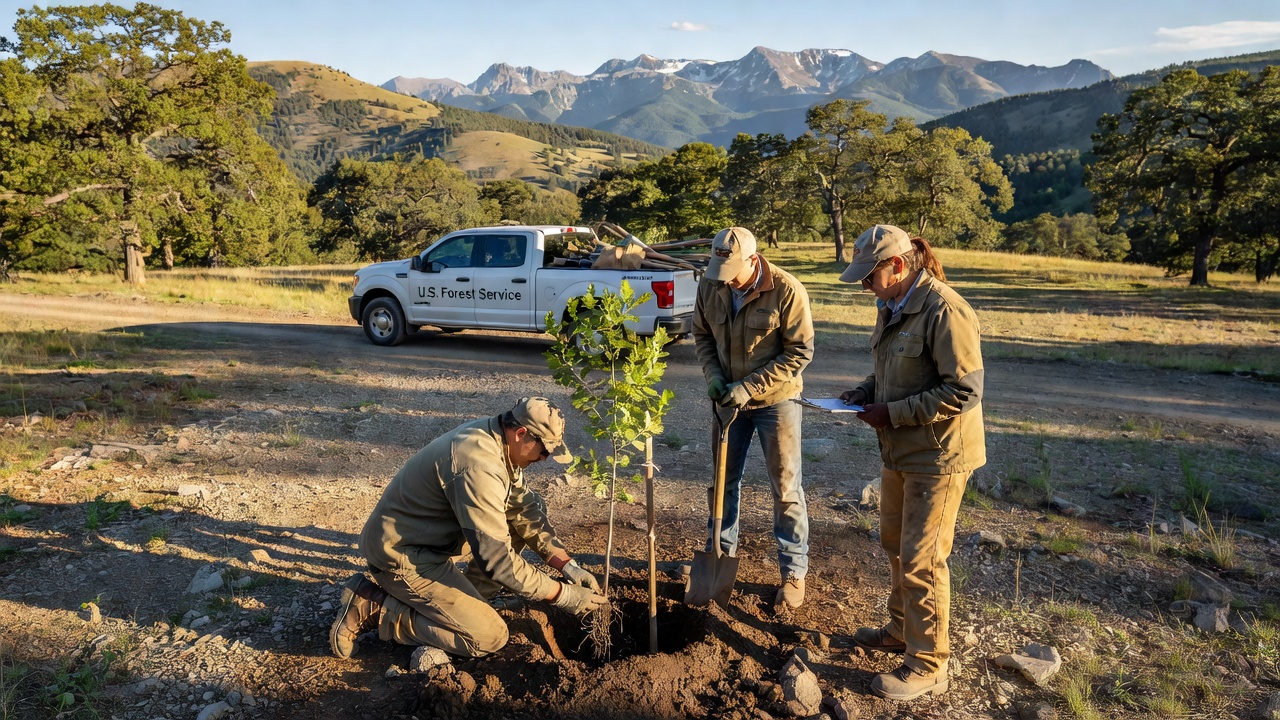
The U.S. Forest Service has awarded $4.2 million in federal grants to restore alpine oak stands across Montana's Bitterroot and Cabinet mountain ranges. The funding targets habitat loss from drought, invasive species and wildfire, aiming to plant 120,000 seedlings over five years while monitoring genetic resilience.
Project Scope and Methods
Grants support crews removing competing conifers and noxious weeds from 3,800 acres of high-elevation sites above 7,500 feet. Restoration teams will use locally sourced acorns from surviving stands to maintain genetic diversity. Soil amendments and temporary irrigation systems will help seedlings survive summer dry spells. Partner universities will track survival rates, carbon sequestration and wildlife use through remote cameras and drone surveys. Early data indicate that treated plots show 35 percent higher seedling establishment than untreated controls.
Land managers emphasize that success depends on continued exclusion of livestock and motorized recreation during the first three growing seasons. The program also trains tribal youth crews in traditional seed collection techniques, linking ecological work with cultural knowledge.
Expected Outcomes and Monitoring
Restored oak patches are projected to improve watershed stability, reduce erosion on steep slopes and provide mast for birds and small mammals. Long-term monitoring stations will record temperature, moisture and herbivory for at least 15 years. Officials note that climate models predict these high-elevation refugia may become increasingly important as lower forests shift. If benchmarks are met, additional grants could expand the program into adjacent ranges in Idaho and Wyoming. The initiative represents the largest single investment in alpine oak recovery to date.