Tina Russell · 2 September 2026
The U.S. Department of Agriculture has allocated federal grants exceeding 4.8 million dollars to restore alpine oak ecosystems in the ranges of western Montana. The funding targets regions where these unique high-elevation oak stands have suffered from prolonged drought and pest infestations over the past decade.
Project Implementation and Funding Allocation
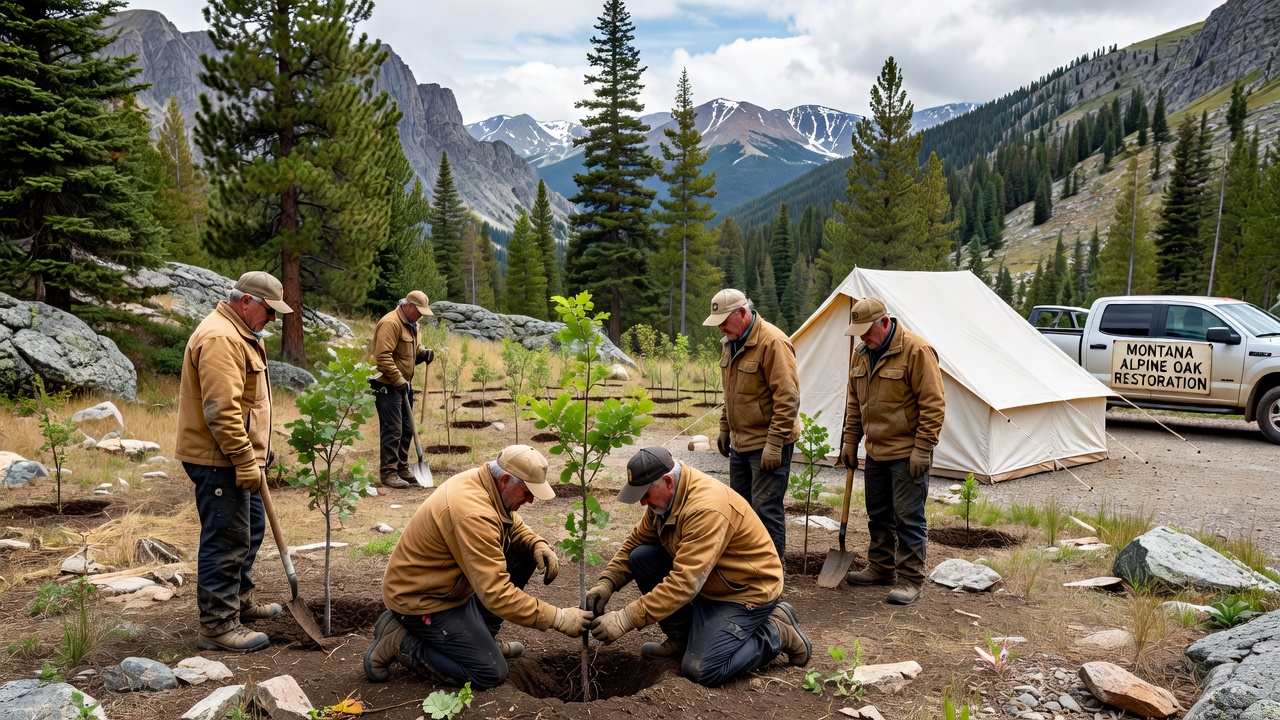
Grant recipients include state forestry agencies and nonprofit conservation groups working in the Bitterroot and Cabinet Mountains. Funds will support seedling propagation in specialized nurseries, soil amendment projects, and the removal of competing vegetation. Researchers will employ drone technology to map oak distribution and track growth rates annually. Partnerships with tribal nations ensure that traditional ecological knowledge informs the restoration plans. Initial phases focus on pilot sites covering approximately 2,500 acres with plans for expansion based on early results. Additional resources target invasive species control and genetic diversity preservation in oak populations.
Alpine oaks in Montana are adapted to cooler temperatures and shorter summers, making them particularly vulnerable to shifting climate patterns. The grants also include provisions for public outreach to raise awareness about the importance of these ecosystems.
Environmental Benefits and Community Engagement
Restored oak habitats are anticipated to bolster populations of birds, mammals, and insects that depend on acorns and canopy cover. Improved forest health could lead to better watershed protection, reducing flood risks in downstream communities. Local economies may benefit from eco-tourism opportunities arising from healthier landscapes. Educational programs funded by the grants will involve schools in monitoring activities, fostering a sense of stewardship among younger residents. Officials project that successful restoration could serve as a model for similar efforts in other western states facing comparable ecological challenges. Continuous evaluation will help refine techniques and ensure sustainability amid ongoing environmental pressures. Long-term data collection will guide adaptive management strategies for future climate scenarios.